
Axis Bank and ICICI Bank consumed 37-59 per cent of their operating profit for COVID-19 provisioning, while the figure is 24 per cent in case of Kotak Mahindra Bank and 10-12 per cent for IndusInd Bank and HDFC Bank.

Two factors play a predominant role in fetching good returns -- stock selection and allocation, suggests Sanjay Kumar Singh.

Tesla Inc chief Elon Musk is set to acquire micro-blogging site Twitter for about $44 billion. Back home, India Inc, too, is seeing aggressive merger and acquisition (M&A) activity with PVR-Inox and HDFC-HDFC Bank announcing their mergers recently. While Axis Bank recently acquired Citi India's India retail business, reports suggest Larsen & Toubro Infotech (LTI) and Mindtree could be eyeing a merger.

Anil Rego, CEO, Right Horizons, answers your personal income tax queries.

7.8 million square feet of mall space is under construction this year, the highest ever since 2011.

SBI's Bhattacharya is ranked second on the list, while ICICI's Kochhar is 5th and Axis's Sharma is 19th in the Fortune list

The unlocking of the economy since June led to a significant recovery in various macro, micro and high-frequency data points, resulting in the equity markets surpassing their previous lifetime highs.

India's equity markets are on a roller-coaster ride, after delivering spectacular returns for two consecutive years - in 2020 and 2021. The benchmark National Stock Exchange's (NSE's) Nifty50 is down 1.5 per cent in the first nine months of the current calendar year 2022 (CY22) as foreign portfolio investors sold Indian stocks due to rising bond yields in the US and across global markets, including India. The sell-off in the Indian equity markets has, however, not been broad-based and largely limited to sectors facing earnings headwinds from rising interest rates, lower commodity and energy prices, and likely economic recession in advanced economies.

RBI awaits fiscal stance, inflation to cool off to decide on rates.

Relations with the government, the bank's majority owner, are a tricky issue for all SBI chiefs, and, like all his predecessors, Khara will be closely watched for his equations with the finance ministry representative on the SBI board.

Three closed-ended equity schemes have been launched in the past month or so and another is set to open soon for subscription.

Raghuram Rajan's 'surgery' uncovers more bad loans

Overseas investors, as well as other key stakeholders, such as brokers, custodians, and clearing corporations, are yet to iron out critical issues, even as the shift towards a shorter trade settlement cycle approaches new phases. Several industry players said foreign portfolio investors (FPIs) are still facing impediments over the trade confirmation timelines, foreign exchange (forex) bookings, and pre-funding requirements. This could potentially act as a roadblock when it comes to moving entirely to the new T+1 settlement cycle from next year.

SBI Capital, Axis Capital, GMR Holdings, United Breweries, Alpic Finance (a Cipla group unit), Saradha Realty, United Bank of India and Trident India are among the prominent entities named in the list.

Though most experts remain bullish on the banking space, they suggest investors buy only those banks whose NPAs are at a manageable level of 3% to 4% and there is credit growth or earnings visibility.

In a bid to gain a bigger share of the customer's wallet, banks are ramping up their cross-selling initiatives.

MFs have garnered record assets in the past one year, led by increased investor participation through SIPs and robust returns in mid-cap schemes.

Arundhati Bhattacharya, the chairperson of country's largest bank SBI, has been named as the most-powerful woman in business in India by Fortune magazine.

Is the worst over for Indian banks? The past two years saw them ride on treasury trades as deposits soared and credit growth dipped sharply. Gross and net non-performing assets (NPAs) moved south, and the provision coverage ratio (PCR), capital buffers, and profitability indicators are back at pre-pandemic levels. So, what's the plot ahead?

Private lenders have also been expanding their branch and automate teller machine networks aggressively.

Pawan Hans, Dredging Corp on list to meet target of Rs 800 bn for 2018-19
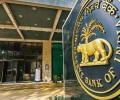
The Reserve Bank on Monday superseded the boards of Srei Infrastructure Finance as well as Srei Equipment Finance, citing concerns over governance and payment defaults, and decided to refer the two NBFCs for resolution under the insolvency law. This is only the second time in as many years that the Reserve Bank of India (RBI) is referring entities for the resolution process under the Insolvency and Bankruptcy Code (IBC) after taking first ever such step in the case of DHFL back in 2019. Superseding the boards of the crisis-hit Srei Infrastructure Finance Limited (SIFL) and Srei Equipment Finance Limited (SEFL), the RBI has appointed Rajneesh Sharma, former Chief General Manager of Bank of Baroda as the administrator to manage the affairs of the two companies.

The RBI has been critical of banks for using restructuring schemes to hide the stress.

Fund managers say the recent fall is not going to sustain.

For the baning sector, 2018 was a 'Year of Exits' - borrowers fled from the country as loans went kaput and many bank CEOs were forced to leave

'Start-ups that generate a majority of their income in India are likely to opt for an Indian listing.'

Fresh buying by domestic institutional investors and better-than-expected June quarter results from some blue-chip companies boosted investor sentiment

For first time in 8 yrs, stake sale proceeds could exceed Budget Estimates. ONGC's acquisition of HPCL alone could get the exchequer more than Rs 30,000 crore.

Retail investors may safely invest in shorter-duration funds, suggests Sanjay Kumar Singh.

Lenders can now initiate recovery proceedings since the SC has lifted the standstill on asset classification, which protected stressed accounts from slipping into NPAs.

Multi-cap funds are best suited to exploit the present market scenario as they are free to invest across all market capitalisations and sectors, says Naveen Kukreja, CEO and co-founder, Paisabazaar.com.

Measured by returns in 2013, the top 10 funds had only three from large houses; nimble strategy could be a factor.

Polarisation and the increase in index weight of a few a stocks have weighed on performance. The worst performers include Nippon India Large Cap and HDFC Top 100 (2.6 per cent).

Retail investors have gained significant heft in the past year amid a sustained uptick in Indian equities. The share of retail investors in companies listed on the NSE reached an all-time high of 7.32 per cent in the quarter ended December 31, 2021, up from 7.13 per cent in the previous quarter and 6.9 per cent a year ago, the data from PRIME Infobase shows. This was despite the Nifty's 1.5 per cent decline during the quarter.

ICICI Bank, HDFC Bank, Infosys, SBI and L&T among fund managers' preferred bets.

While law-abiding customers are harassed for KYC and have to comply with endless paperwork even to open and close accounts, DHFL could easily open nearly 260,000 fake home-loan accounts, reveals Debashis Basu.

Stocks such as ICICI Bank, Axis Bank, State Bank of India, Bank of Baroda and HDFC Bank are among the top banking picks of analysts for 2017. A decline in cost of funds and treasury gains are expected to help stabilise their net interest margins

Ajit Mishra, vice president, Research, Religare Broking, answers your queries

Select companies in infra, capital goods, private banks, auto, oil & gas, and mining could be considered by investors.
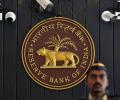
The Reserve Bank of India (RBI) is precariously balancing two opposing objectives - maintaining easy financial condition in the domestic market, while ensuring external stability - and economists have started taking note. They say India is going through the classic trilemma of the 'Impossible Trinity'. The RBI cannot have an independent monetary policy (setting domestic interest rates) in an environment of an open capital account and flexible exchange rates. What is even more complicated for the central bank now is that financial market stability overlays all the other three objectives.
 © 2026 Rediff.com - Advertise with us - Disclaimer - Privacy Policy - Sitemap - Feedback - About us - Terms of use - Grievances